The hardest day at any growing company is the day a new hire walks in and someone realises nobody has set up their Slack, ordered their laptop, or written down where the brand assets live. The hire spends their first week asking the same five people the same questions. HR spends the week answering them for the third time this quarter.
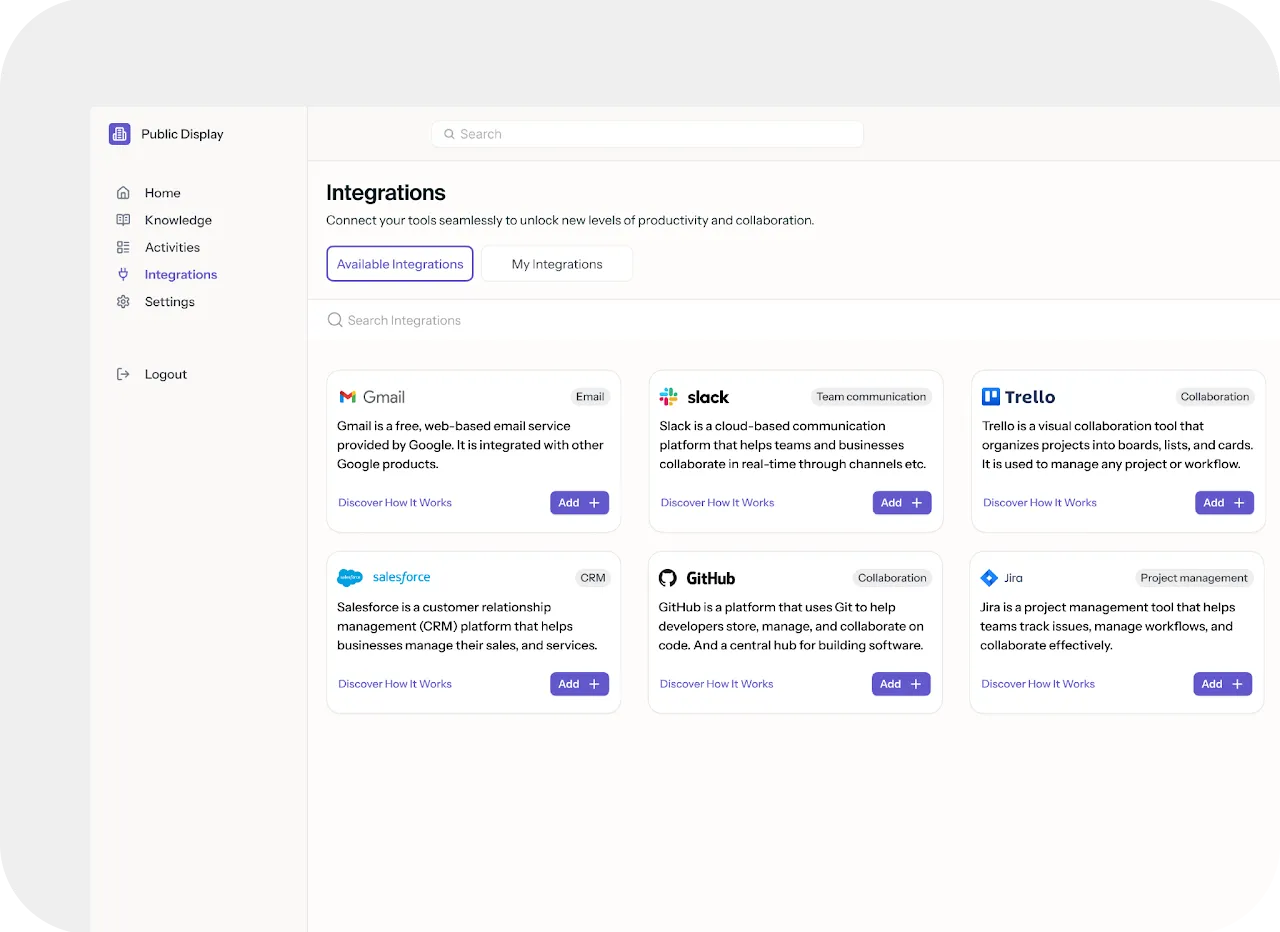
OnBuddy, built by Wale Ayandiran and Franklin Chieze out of London, is the kind of product that exists because someone has been on both sides of this. It positions itself as an HR operations platform with an AI assistant that lives in Slack and answers the questions HR is tired of answering. The platform has been live with a small number of teams for several months, with the integrations, knowledge base, and AI assistant in active use.
The product
OnBuddy bundles three things that usually live in three different tools. Automated onboarding workflows that walk a new hire through their first 90 days. A knowledge base where company docs and policies get indexed into something searchable. And a Slack-native AI assistant that uses that knowledge base to answer employee questions about policies, leave, benefits, and IT setup, without raising a ticket to HR.
It integrates with Slack, Teams, Google Workspace, and HR systems like Workday and BambooHR. Pricing is enterprise rather than self-serve, with a founder call as the first step.
The bet
Most AI assistants for the workplace begin with engineering or sales, because those are the functions where productivity gains are easiest to measure. HR is harder. The gains from a working HR assistant are diffuse, slow, and political, which is why nobody in the category has spent serious effort there. The AI tools that pitch themselves as HR copilots usually mean “we added an HR-themed chatbot to an existing generic assistant.”
OnBuddy is building the other direction. Start with the operations of the function, the workflows nobody loves, the knowledge that lives in 4 different Sharepoint folders. Then add the assistant on top of the operations, where the knowledge it draws on is actually being maintained.
The bet underneath is that HR-as-platform is a more durable position than HR-as-feature. A general workplace AI with some HR templates can be replaced by next year’s general workplace AI. A purpose-built HR operations platform with an AI layer that knows the company’s specific policies, runs its specific onboarding workflows, and ingests its specific knowledge base is harder to switch off, because the configuration itself is the moat.
What to watch
The category is filling up. Lattice, Bob, Rippling, and several AI-first HR platforms are building toward overlapping product visions. OnBuddy is competing in a market where the bigger players have funding and distribution a head-on fight cannot match.
2 things will tell us whether the bet is working. Whether the customer mix shows expansion within organizations, not just new logos, because the durability of an HR platform is measured by how many teams inside one customer end up using it. And whether Wale and Franklin narrow the product’s positioning from “the HR platform” to a specific use case it owns better than anyone else, the move that lets a small team compete against larger ones.
What we’re rooting for
We’re rooting for OnBuddy to add 50 paying teams by end of June. It’s a reachable bar from where the platform sits today, and the kind of number that shifts the conversation from “early-stage product” to “platform with traction.” Spotlight will be cheering every signup along the way.
Teams interested in trying OnBuddy can book a call.